Thursday, 1 July 2021

Beasts before us is a great read


Bloomsbury Sigma 2021
ISBN 978-1-4729-8397-8

Elsa Panciroli is a young Scottish palaeontologist with a story to tell. She challenges the narrative that mammals were insignificant creatures living in the shadow of the dinosaurs until after the end-Cretaceous extinction.

The first age of mammals, she tells us, was in the Permian 300-250 million years ago. This is when the ancestors of therians were dominant and included large herbivores and carnivores quite as impressive as the later dinosaurs. Then there was another extinction event triggered by massive lava flows lasting 800 thousand years - The Great Dying. Those that survived were mostly small and included the first mammaliaforms. 

Yes, the definition of a mammal, especially in the fossil record, is based on us having only two sets of teeth with the deciduous teeth being lost at weaning. So for purists Elsa Panciroli is describing the history of the Synapsids, one of the two great lineages of amniotes, from which mammals arose. The other lineage was Sauropsids that comprises dinosaurs (including birds) and reptiles.

In Pursuit of Early Mammals

The history of synapsids has been told before but in a more academic style by one of Panciroli's heroines Zofia Kielan-Jaworowska (review here). 

Some mammalian features undoubtedly evolved earlier than lactation. They include fur and differentiation of the teeth into incisors, canines and molars. The immediate ancestors of therians adopted a nocturnal life style. There is evidence for this in the structure of our eyes (two of the four types of cone in other vertebrates were lost) and most mammals have poorer colour vision than primates where it has been partially regained through evolution of opsins. 

Elsa Panciroli started this book while finishing her PhD studying Jurassic fossils from the Isle of Skye. A truly astonishing achievement. The account of synapsid evolution alternates with trips to the field, scanning of fossils embedded in rock using the synchotron near Grenoble and (carefully supervised) viewing of rare Chinese fossils. 

Zofia Kielan-Jaworowska in the field

Panciroli is also very much of her time. She laments that many key fossils were taken without consultation of indigenous people. It concerns her that most palaeontologists have been male (despite Kielan Jaworowska see here) and of course she worries intensely about climate change. In a final short chapter she speculates on what type of mammal will surive the current mass extinction.

Wednesday, 26 May 2021

Ingeborg Rapoport: a pioneer in perinatal medicine

Professor Ingeborg Rapoport (second from left) 1985
Bundesarchiv CC BY-SA 3.0

The third season of Charité takes place in 1961 during erection of the Berlin Wall. Several of the characters are based on real life persons the most striking being the pediatrician Dr Ingeborg Rapoport. She later became the first Professor of Neonatology in Germany. Indeed one of the central themes in the television series is the conflict between pediatrics and obstetrics about care of the newborn. Obstetrics is here represented by Professor Helmut Kraatz.

Ingeborg Syllm was born in German West Africa (Cameroon) in 1912. She was raised as a protestant yet denied completion of her medical degree when the NSDAP came to power because her mother, a concert pianist, was Jewish. In 1938 she moved to the United States where she completed her medical education and specialised in pediatrics. In 1944 she married Samuel Mitja Rapoport a physiological chemist who had left Austria after the Anschluss. They were to raise four children.

Both the Rapoports were members of the Communist Party and had to flee again in the 1950's when under investigation for un-American activities. They finally settled in Berlin and remained in the DDR after the wall was built.

Ingeborg Rapoports autobiography

In 1969, just before the retirement of Kraatz, Ingeborg Rapoport was elected to the first Chair of Neonatology in Germany. She herself retired in 1973 but remained active, publishing her autobiography Meine ersten drei Leben (My First Three Lives) in 1997.

In 2015, when the University of Hamburg offered her an honorary doctorate in lieu of that denied her in 1937, she asked instead leave to defend her thesis and passed the oral examination with magnum cum laude. Ingeborg Rapoport was then 102 years old. She lived to be 104.

Tuesday, 2 February 2021

Professor Sauerbruchs Placenta Cream


Ad for Hormocenta from Professor Sauerbruch

The second season of Charité about the famed Berlin hospital revolves around the character of Ferdinand Sauerbruch the leading surgeon of his time (brilliantly portrayed by Ulrich Noethen).

His second wife Margot (née Grossman) started to read Medicine after leaving her second husband and then served an internship at Charité where she met Ferdinand. They were married in March 1939. In addition to practising medicine Margot was a businesswoman. As managing director of Pharmazeutischen und Kosmetischen Präperate Böttger Gmbh she marketed a popular skin cream based on a placenta extract. Her famous husband's name featured in the advertisements.

Ad for Hormocenta featuring the
actress Marika Rökk
Placenta extracts in cosmetics were more widespread than I had supposed. Many were based on placental extracts and amniotic fluid of cattle (see here). 

The Surgeon (Ferdinand Suaerbruch)
by Max Lieberman (Wikimedia Commons)
I am watching Charité on Danish television but the first two seasons are available on Netflix. The first season features such luminaries as Rudolf Virchow, Robert Koch (Nobel Prize 1905), Emil von Behring (Nobel Prize 1901) and Paul Ehrich (Nobel Prize 1908). 

Friday, 8 January 2021

Land bridges to Madagascar


Sweepstakes distribution as envisaged by G. G.Simpson


One of the first posts on this blog (here) was about sweepstakes distribution as proposed by George Gaylord Simpson. Simply put it envisaged that animals endemic to Madagascar, such as lemurs and tenrecs, as well as now extinct hippopotami, crossed the Mozambique Channel on rafts of vegetation. 

This has been widely accepted and bolstered by evidence that ocean currents in the Cenozoic might have been more favourable to rafting than they would be today (here).

Now a cross-disciplinary group has taken a fresh look at the question and reached quite a different conclusion (here). They begin by questioning whether small primates or tenrecs could survive on the crossing which they estimate could take several months. Further they dismiss the idea that a hippo could swim to Madagascar; their arguments on this point are convincing. Could a raft be strong enough to support a hippo during the crossing (as pictured in the cartoon above)?

Verreaux's Sifaka (Propithecus verreauxi)

They suggest that there has been too much focus on the width of the Mozambique Channel and not enough on its depth. They present a mass of data, bewildering to me, but supporting the possibility of land bridges from Africa to Madagascar. The first of these at the Cretaceous-Palaeocene boundary might have been used by the ancestors of lemurs and tenrecs (their African cousins are lorises and otter shrews).

A land bridge at the Eocene-Oligocene boundary could have been used by the ancestors of Malagasy rodents and Malagasy carnivores such as the fossa. Finally there was an incomplete land bridge at the Miocene-Pliocene boundary that might be a more plausible route for a hippopotamus to cross.

The obvious question is why the Malagasy fauna is so depauperate. Why are there no monkeys, large cats or ungulates? The authors suggest they may have made it to Madagascar but gone extinct. Fortunately for this argument, the fossil record on Madagascar is very poor.

And what about that other discussion of land bridges versus rafting - how did hystricognath rodents and the ancestors of Neotropical primates reach South America (see previous post)?

Wednesday, 9 December 2020

The Sediments of Time - Book Review


This account of Meave Leakey’s search for human ancestors in the Turkana region of Kenya is at once intensely personal and scientifically sound.

Born Meave Epps in 1942 she read marine biology at Bangor but found herself without a job because research ships lacked facilities for women. On a whim she answered an advertisement by Louis Leakey who was recruiting for a primate research centre in Kenya. Once there she soon found herself looking for hominin fossils with Louis’s son Richard whom she later married. Their life together was full of drama as Richard suffered both kidney failure and the loss of his legs in a plane crash.

Reconstruction of Homo rudolfensis
(KNM-ER 1470) discoved by Meave Leakey 
Photo byy Don Hitchcock CC BY-SA 4.0

Meave soldiered on and discovered or co-discovered significant specimens of several hominins ranging from australopithecines through early members of our genus (above) to Homo erectus. The first part of the book details this story and gives a fascinating account of work in the field (with no facilities for men or women!) and the ever present need to find fossils attractive enough to ensure continued funding. In the second part the emphasis shifts towards putting individual fossils in the context of work by others (including mother-in-law Mary Leakey) and painting a broader view of human evolution. The final part continues the story of exploration while explaining the changes in biology that led to evolution of our species.

Meave and Richard had two daughters. Louise followed in the Leakey family business of finding fossils while Samira co-authored this book. One chapter considers the importance of grandmothers for human reproduction and indeed there are grandchildren. Who knows if a fourth generation of Leakeys will search for clues to our past?


There are excellent photos from life in the field and some very useful line drawings. But surprisingly few photos of the fossils themselves. That is really my only criticism of an excellent book. I found it useful to have the well illustrated book Our Human Story to hand as a complement to the text (reviewed here).


Wednesday, 30 September 2020

Arsenic and old lakes

Microbial Mats (purple) at Laguna La Brava Chile
From Visscher et al. 2020 CC BY 4.0

Atmospheric oxygen was not plentiful until the Great Oxidation Event yet life appeared much earlier during the Archean Eon (more than 3 gigayears ago). One suggestion has been that  arsenic acted as an electron donor to drive photosynthesis in early life forms.

A new paper by Visscher et al. shows how this might have worked. They investigated microbial mats from Laguna La Brava in northern Chile. These survive under hypersalinic and anoxic conditions by using arsenic and sulphur as electron donors.

A parallel is drawn with the Archean lakes of the Tumbiana Formation where lithified microbial mats are found. 

Thursday, 3 September 2020

Kindred or cavemen


Neanderthals gained prominence in the Eemian interglacial some 130 thousand years ago and survived several cold and warm periods before disappearing 40 thousand years ago. So they have a much longer history than modern humans. What were they like? Becky Wragg Sykes gives some answers and where answers are missing supplies well argued speculation. Often speculation is backed up by comparison with recent human hunter-gatherers.

The strength of this book lies in covering so much ground. For example I have followed the ancient DNA closely, know a bit about fossil finds, but have steered clear of lithics (e.g. bifaces formerly known as stone axes). Yet there are so many more of these remains and new methods to get the most out of them. They are key to understanding the Neanderthals skills and way of life.

Importantly Neanderthals did not just huddle in caves between hunting woolly mammoths. They also lived through warmer periods and hunted horses and other prey. They were geographically diverse too living in the warmer climes of Iberia and across Asia to the Altai mountains in Mongolia.

It is common knowledge that Neanderthals mated with humans and with the enigmatic hominins called Denisovans about whom we know very little. Sykes thinks they may have been so like us that sex could have been consensual. She is a great fan of Jean Auel (whose books I too have read).

My enthusiasm waxed and waned with every chapter. I could not quite get accustomed to the author's style of writing. Apart from lithics I did not learn an awful lot. But perhaps the book was not written for me.


This one was more my style.

Tuesday, 25 August 2020

Embryologists meet 1913 in Rio de Janeiro

From left: J. P. Hill, E. Bresslau and G. S. Sansom 1913
Instituto Oswaldo Cruz

J. P. Hill had made his name studying placentation in Australian marsupials. He returned to England in 1907 as Professor of Zoology at University College London. In October 1913, accompanied by G. S. Sansom he went to Brazil to obtain material from South American marsupials in particular the Brazilian common opossum (Didelphys aurita) (see biography here).

Whilst in Rio de Janeiro he met up with the eminent German zoologist Ernst Bresslau who was there from 1913 until the outbreak of war in the following year (see biography here). Bresslau was interested in the evolutionary origins of the mammary gland. Thus like Hill his research spanned monotremes, marsupials and eutherians. 

Bresslau was then at the University of Strasbourg. Later he was recruited to Cologne where he built up the zoology department. He was dismissed from this post by the Nazi regime in 1934 but went to start up zoology at the newly established University of Sao Paulo. Sadly he died there in the following year.

G. S. Sansom did interesting work on germ layer inversion in the water vole (Arvicola amphibius) and later with Hill on the guinea pig (Cavia porcellus). Sansom was a renowned climber. During World War I he served in the Royal Flying Corps and RAF and was awarded the Military Cross and Distinguished Flying Cross. 

Note on the photo: I have identified Hill and Bresslau by comparison with other photos. The printed text reads, "Prof. Ernest Bresslau - Strasborgo; Prof. J. P. Hill - Londres; Mr G. S. Sansom - Londres"

Tuesday, 7 July 2020

Kees Naaktgeboren 1934-2020

Birth in Domestic and Wild Dogs
Cornelis (Kees) Naaktgeboren was a pioneer in research on the biology of birth. His preferred method was to observe, photograph and film animals before, during and after birth. He kept several wild animals in his home to gain their trust.
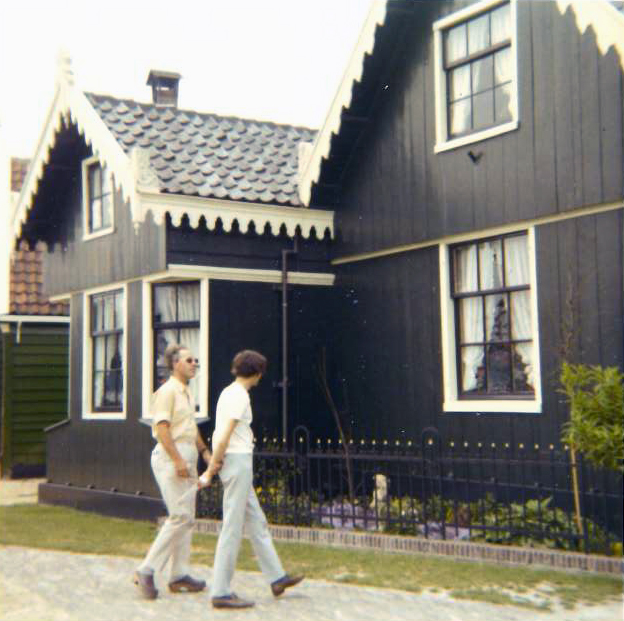
This 1970 photo shows Kees (left) when I visited him at Zaandam
I was privileged to work with Kees in 1967 when we filmed the birth process in the rabbit. He incorporated our work in a film (one of many) for Institut für den Wissenschaftligen Film in Göttingen.
Title page of Kees' most important publication
The Biology of Birth ISBN 3 490 04518 1
Most of Kees' publications were in German and his important book, co-authored with E. J. Slijper, is relatively unknown to anglophones. In addition to summarizing his own work it is an exceedingly valuable source for the older literature.

Kees was born 7 November 1934 and died 25 February 2020.

Monday, 13 January 2020

Congratulations to Sofie Lykke Møller

Sofie Lykke Møller's Ph.D. Thesis
Sofie Lykke Møller successfully defended her Ph.D. thesis last week. It was my privilege to be one of her examiners. This is part of an ambitious project conducted in rural Tanzania by researchers from the University of Copenhagen (here). Sofie examined the vasculature of placenta at term and related her findings to a history of anaemia (here) or malaria (here) at various stages of pregnancy.

After the oral exam: Anthony Carter, Sofie Lykke Møller,
Annetine Staff and Peter Damm
This involved a sophisticated stereological analysis with random sampling of the placenta in the field and random orientation of the tissue blocks for sectioning in the laboratory.

Anaemia or malaria in the second half of pregnancy led to adaptive responses that included increases in the length and surface area of the capillaries in the terminal villi. 

Malaria infection before 14 weeks of gestation was reflected in changes at term including a reduction in the volume of intermediate villi and thickening of the endothelial component of the interhaemal barrier. Thus even though entry to the intervillous space is limited at this time, the surface proteins on infected erythrocytes seem able to hinder normal placental development.

Friday, 15 November 2019

Can invasive placentation be linked to oxygen requirements of the brain?

Skull of a male Western Gorilla
By Didier Descouens CC BY-SA 4.0
Three years ago (here) I reported a study suggesting the metabolic rate of the brain had increased during hominin evolution. This conclusion was reached by extrapolating from measurements of the carotid foramina in fossil skulls of adults (here). I asked whether there was an increasing demand for oxygen during fetal development and whether this could have driven an increase in the depth of trophoblast invasion of the placental bed.

Now Seymour and colleagues return to the fray (here). First, they address criticisms of their previous reliance on an equation for shear stress and introduce a modified approach for estimating blood flow in the internal carotid artery. This replicated their previous findings.

Second and more important, they applied their methods to the great apes Pongo, Pan and Gorilla. A surprising finding was that estimated brain metabolic rate was higher in these apes than in the hominin ancestor Australopithecus. (Brain volume was about the same in extant great apes and australopithecines.)

Decidual myometrial junction in placental bed
of a Western Gorilla with trophoblast stained red
From Carter et al. 2015 (here)
We have shown that the pattern of trophoblast invasion is similar in chimpanzee, gorilla and human (here). This is consistent with an improved oxygen supply to the fetal brain compared to gibbons and Old World monkeys. However, unless this represents convergent evolution, one would infer that the pattern was present in Australopithecus. 

Perhaps the oxygen supply needed to support the brain of the term fetus was present in the human ancestor, but brain development more complete at birth. The human newborn is secondarily altricial, i.e. highly dependent on parental care (previous post). The only clue we have about Australopithecus is that breastfeeding lasted for a shorter time than otherwise expected (here).

Thursday, 15 August 2019

Women Physiologists in the Naughty Nineties


A group portrait of physiologists and embryologists awarded honorary doctorates by Cambridge University in 1898 was the subject of a previous post (here). A friend noted there were no women among them. The Fourth International Congress of Physiology did, however, have several female participants listed in the proceedings. In addition, research by an Oxford physiologist was presented by Gustav Mann and the findings of four Russian scientists by Hugo Kronecker. In trying to identify them some interesting stories emerged.

Miss J. Brinck, London. Julia Maria Brinck (1854-1926) was born in Helsingborg, Sweden. She trained initially as a physiotherapist and then studied medicine at the London School of Medicine for Women (later the Royal Free Hospital). She could not obtain a licence to practice in the UK but obtained one from Dublin in 1886. She worked in Berne under Kronecker and received an M.D. degree in 1887, the first Swedish woman to obtain a higher degree in medicine.

Miss M. Greenwood, Lecturer in Physiology, Newnham. Marion Greenwood later Bidder (1862-1932) read Natural Sciences at Girton College Cambridge. As a woman she was denied a degree due to a policy confirmed by a vote in 1897 and not reversed until 1947. She was Director of Studies in Biology at Newnham and Tutor in Physiology. From 1890 to 1899 she was Director of the Balfour Biological Laboratory for Women (see here). Greenwood was one of the first women to do independent research at Cambridge and published several papers in Journal of Physiology. In 1899 she married marine biologist George Parker Bidder.

Ordre des Palmes (Officier d'Académie)
Miss H. J. Hutchinson, Nottingham. Harriet Jane Hutchinson (1860-1946) was Lecturer in Physiology and Histology and Warden of Foreign Students at University College, Nottingham. She retired in December 1934 after more than 35 years of service and in the following year was made an Officier d'Académie of the Ordre des Palmes in recognition of her support of French students attending the College. 

Miss Sowton, London. Sarah Charlotte March Sowton (1853-1929) was among the first six women admitted to the Physiological Society (see here). She studied the effects of carbon dioxide on skeletal and cardiac muscle at St. Mary’s Hospital, London. At the 1898 meeting, she read a paper on the current of injury in medullated nerve and, with Alice Waller, another on the action of muscarine, choline and neurine on isolated nerve.

Miss M. C. Tebb, London. Mary Christine Tebb later Rosenheim (1868-1953) read physiology at Girton College, Cambridge. Like Marion Greenwood, she was not awarded a degree. She worked in Cambridge and later at King’s College London, where she met and married a German physiologist, Sigmund Otto Rosenheim. She published a paper on the hydrolysis of glycogen in the same year as the Congress.
The Augustus Desiré Waller Family
Wellcome Collection CC BY 4.0
Mrs A. D. Waller, London. Alice Mary Waller née Palmer (1859-1922) is here listed with her husband’s initials. She studied at the London School of Medicine for Women where she was a student of her husband, Augustus Desiré Waller FRS, who created the first practical ECG machine. One of his biographers wrote, “the wife helped her husband in his work and her name appears with his on some of his published work.” At the 1898 meeting she read a paper on the influence of salts on the electrical mobility of medullated nerve.

Miss F. A. Welby, Demonstrator in Physiology, Women’s School of Medicine, London. Frances Alice Welby (1862-1947) was then a demonstrator at that institution. She is best known as an author and translator of physiological and other texts.
(Mary) Edith Pechey-Phipson by Frank Meadow Sutcliffe
albumen cabinet card 1870s NPG x12740
(C) National Portrait Gallery
Mrs E. Pechey Phipson Bombay. As Edith Pechey (1845-1908) she was one of the Edinburgh Seven, the first women to matriculate at any British University. Despite this achievement, they were not allowed to proceed to a degree (they were awarded posthumous medical degrees by Edinburgh University in July 2019). Edith Pechey therefore completed her education at Berne where she also achieved an M.D. for a thesis on uterine catarrh (endometritis). Like Julia Brinck she got a licence to practice at Dublin. She practised for six years in Leeds before going to Bombay as Senior Medical Officer at the Cama Hospital for Women and Children. She married Herbert Musgrave Phipson, a wine merchant who was Secretary to the Bombay Natural History Society.  After her return to England in 1905, she was active in the suffragette movement.

Miss M. B. Wilson, Instructor in Physiology at Women’s College Infirmary, New York. Margaret Barclay Wilson (1863-1945) was born in Dunfermline but migrated to the United States with her parents. She studied at the Normal College of the University of New York (later Hunter College) and received her M.D. from the Women’s College Infirmary and M.S. from New York University. She later taught physiology and hygiene at Hunter College, where she was Head of the Department of Physiology.

Non-participants


Nadine Lomakina, Bern, paper on innervation of heart in dog and horse read by H. Kronecker. Nadezhda Lomakina (1873-?) was from Moscow and read medicine at Bern 1893-1899. She was awarded her doctorate in 1900.

Pélagia Betschasnoff, Bern, paper on heart rate of the frog read by H. Kronecker. Pélagia Beschasnova (1860-?) was from St. Petersburg and read medicine first at Zurich then at Bern but did not graduate.

Julia Devine, Bern, paper on respiration of the toad heart read by H. Kronecker. Juliia Devine (1868-?) was born in Moscow but had a British family background. She read medicine at Bern 1893-1899.

Ludmila Schilina, Bern, paper on Ludwig’s kymograph and Hürthle’s tonometer read by H. Kronecker. Liudmila Schilina (1872-?) was born in Krasnoyarsk, Siberia and read medicine at Bern 1893-1898.

An account of the Russian scientists in Kronecker’s laboratory is given by Creese, M. R. S. Ladies in the Laboratory IV: Imperial Russia’s Women in Science, 1800-1900; Lanham MD: Rowman and Littlefield, 2015.

Lily H. Huie, Oxford, paper on the gland cells of Drosera read by Gustav Mann. Eliza Henrietta (Lily) Huie (1862-1930) was a botanist and Drosera is the sundew. She worked at the Physiological Laboratory in Oxford 1896-1898 and later at the Royal College of Physicians, Edinburgh.

There is a brief mention of Lily Huie in Creese, M. R. S. Ladies in the Laboratory? American and British Women in Science, 1800-1900, Lanham Maryland: Scarecrow Press, 1998.

Wednesday, 17 July 2019

Networking in the Naughty Nineties

Group Portrait outside the Old Schools, Cambridge 1898
A. J. Allen Wellcome Collection CC BY 4.0
In August 1898 Cambridge hosted both the International Congress of Physiology and the International Congress of Zoology. The group portrait was no doubt taken on 25 August 1898 after conferment of honorary doctorates on the physiologists (Franklin 1938) as well as Haeckel and Hubrecht from the zoology meeting. The ceremony was at the Senate House adjacent to the Old Schools that forms the backdrop to the portrait. Franklin mentions the Vice-Chancellor Alex Hill is in the background (recognizable from the droopy mustache).

Those shown (left to right) are:

Étienne-Jules Marey (1830-1904) French cardiovascular physiologist also known for using chronophotography (a forerunner to cinematography) to study animals in motion. He collaborated with Anton Dohrn to document the movements of fishes.

Anton Dohrn (1840-1909) German entomologist and marine biologist who studied with Virchow, Haeckel and Gegenbauer at Jena. He was the founder and first director of the Zoological Station at Naples.

Camillo Golgi (1843-1926) Italian neuroscientist and biologist who also made a significant contribution to renal physiology. He discovered the Golgi apparatus a finding dismissed as an artefact by many contemporary scientists. He received the Nobel Prize in Physiology or Medicine 1906.

Ernst Haeckel (1834-1919) German zoologist whose work was hugely influential. His many interests included embryology and he famously argued that ontogeny recapitulates phylogeny.

Ambrosius Hubrecht (1853-1915) Dutch zoologist and embryologist. He described placentation in insectivores (sensu lato) and a major paper on the placentas of tree shrew and tarsier was published in the Proceedings of the Fourth International Congress of Zoology (pp. 343-411).

Wilhelm Kühne (1837-1900) German muscle and nerve physiologist. He also studied the physiology of digestion and coined the term "enzyme."

Henry Pickering Bowditch (1840-1911) American physiologist who was the founding President of the American Physiological Society and Dean of Harvard Medical School. He had worked beside E. J. Marey in Claude Bernard's lab in Paris and later with Carl Ludvig in Leipzig. 

Alexander Hill (1856-1929) Vice-Chancellor of University of Cambridge 1897-1899 had been Hunterian Professor at the Royal College of Surgeons. He was a lecturer in physiology and in addition to his ceremonial rôle was a scientific member of the physiology congress.

Hugo Kronecker (1839-1914) German muscle physiologist then at Berne, Switzerland. Like Bowditch he had worked under Carl Ludwig. 

Franklin KJ. A short history of the International Congresses of Physiologists. Ann Sci 1938; 3: 241-335 with 15 Plates. 

Wednesday, 12 June 2019

Placentation in sloths

Placenta and fetal membranes of Hoffmann's Two-toed
Sloth (Choloepus hoffmanni) from Turner 1872
Two recent papers cast light on the evolution of sloths. Delsuc and colleagues obtained mitochondrial genomes from living and extinct sloths (here) while Presslee and colleagues used proteomics to describe Type I collagen - likewise from extant and extinct species (here). They agree that notions of sloth evolution based on morphology need revision. 

It was confirmed that two-toed and three-toed sloths are not closely related and group with different forms of ground sloths. A third group with a suspensory life style was found to have diverged even earlier. These sloths crossed a land bridge to the Greater Antilles and went extinct just a few thousand years ago.

Interhaemal barrier of the pale-throated three-toed sloth
(Bradypus tridactylus) Courtesy of Allen C. Enders
Together with anteaters and armadillos, sloths belong to the ancient superorder Xenarthra. Armadillo placenta has been studied in some detail. It is villous haemochorial (discussed here). Anteater placentation is rather similar (previous post). Sloths are different. As shown by Turner, the placenta is lobulated in appearance. It is labyrinthinre and endotheliochorial (here).

Given current opinion on the relations between sloths (Folivora), anteaters (Vermilingua) and armadillos (Cingulata), parsimony dictates that their common ancestor would have had a villous haemochorial placenta. Thus the sloth placenta represents a derived state. The most recent common ancestor of two-toed and three-toed sloths lived >25 million years ago whereas sloths diverged from anteaters >50 mya. 

Tuesday, 14 May 2019

Epiblast from the past

Mouse blastocyst with epiblast (EPI), trophoblast (TE)
and primitive endoderm (PE) or hypoblast from Selenka 1883
The three cell lineages of the blastocyst are trophoblast, hypoblast (primitive endoderm) and epiblast. The epiblast creates the embryo and contributes extra-embryonic mesoderm to the fetal membranes. An insightful review by Guojun Sheng (OA here) traces epiblast evolution across reptiles/birds, monotremes, marsupials and eutherians.

First he summarizes early development in the mouse as known since Selenka and Sobotta and now understood in terms of gene expression. Some of this translates to early human development (previous post). Yet the behaviour of the epiblast is very different in mammals as diverse as rabbit, pig, cattle and dog. As an example there is loss of the polar trophoblast to expose the epiblast. There are also important differences in gene expression as known from cattle (OA here). 

Meroblastic cleavage of the platypus egg
From Hughes 1993 (here)
Monotremes are more like birds and reptiles starting with the incomplete (meroblastic) cleavage of the yolky egg. Guojun Sheng suggests how the monotreme and reptile/bird patterns of epiblast epithelialization could each have evolved from a hypothetical amniote prototype.

Embryonic and trophoblastic areas of the marsupial
blastocyst as envisaged by Hartman 
Marsupials have a blastocyst-like stage with no inner cell mass (previous post) and it is not fully clear how the cell lineages segregate. Guojun Sheng thinks it can be seen as an intermediate in evolution from a hypothetical therian prototype. 
Serial sections through the blastula of the lowland streaked tenrec
(
Hemicentetes semispinosus) from Bluntschli 1937
Finally, he suggests that the blastula stages described in tenrecs by Bluntschli and elephant shrews by van der Horst (discussed here) may reflect the early eutherian prototype.

Altogether a very good read.


Friday, 18 January 2019

Lagoa Santa skulls still perplex Danes

Peter Wilhelm Lund (1801-1880)
Danish National Library (public domain)
When Peter Lund excavated human remains from Sumidouro Cave he was thoroughly perplexed. Not least because they were jumbled together with the bones of an extinct megafauna. This was in 1840 so well before Darwin had published On the Origin of Species (which cites Lund's work).

The skeletons were shipped to Copenhagen and examined there by several distinguished anthropologists (Lund never returned to Denmark). The consensus that arose was that "Lagoa Santa Man" was unrelated to present-day Native Americans. 


Springer 2017: ISBN 978-3-319-57465-3
Research and debate was renewed in the last century with new excavations in the caves near Lagoa Santa (now a suburb of Belo Horisonte). A key find was Luzia, a skull feared lost in the recent fire at the National Museum in Rio de Janeiro (previous post) (it survived but suffered heat damage). This skull was dated to 11,000 years ago.

Comparisons have been drawn between the features of the Lagoa Santa skulls and those of Australasian peoples such as Andaman Islanders. What can genomics tell us? A first set of clues hinted at an early wave of migrants designated "Population Y" who left a genetic signature that is strongest in some isolated Brazilian communities (see my review of David Reich). 


Skull from Sumidouro Cave excavated by Peter Lund
Now a Dane has ventured into the Lund Collection and extracted ancient DNA from a 10,400 year-old skull. The results appeared in Science last December (here). Eske Willeslev and his group found a clear Australasian genomic signature that was absent in other ancient remains from the Americas. They concluded this signal, "implies that an early group possessing it had disappeared or that a later-arriving group passed through North America without leaving any genetic trace." A conclusion echoed by the lead author, José Victor Moreno-Mayar, who simply said (here), "How did it get there? We have no idea."

It seems the Lagoa Santa remains are just as perplexing to Willerslev as they were to Lund and for a similar reason: they do not neatly fit into the scheme of things.

Postscript

The Willerslev paper is really worth reading. It builds on earlier work to confirm that Native Americans (other than Inuits) derived from a group that split from East Asians and resided in Beringia (Ancient Beringians). As they advanced into the Americas at the end of the Ice Age there was an early split into Northern (NNA) and Southern Native Americans (SNA). The SNA dispersed rapidly south of the remaining ice some 14,000 years ago. In a later phase there was admixture from a population in Mesoamerica that migrated both north and south. Another paper on ancient DNA from the Reich group also found evidence for rapid expansion into South America (here), but did not have Lagoa Santa in the data set.

Monday, 14 January 2019

Darwin's hunch

ISBN 978-1-4314-2425-2
Darwin's hunch was that humans evolved in Africa. As Christa Kuljian shows, for most of the twentieth century, this was not the prevailing view among palaeoanthropologists, who felt sure humans had emerged in Europe or Asia. Indeed, the ready acceptance of the Piltdown forgery reflected both this view and the importance attached to brain size. In contrast, the Taung child, an australopithecine discovered in 1924 by Raymond Dart, was disregarded because of its location and small brain size. 


The Taung child (Australopithecus africanus) discovered in 1924
Ditsong National Museum of Natural History CC BY-SA 4.0
Indeed this highly entertaining account of the South African contribution to anthropology by Dart, Robert Broom, Phillip Tobias and others exposes how misconceptions both within South Africa and without shaped interpretation of the fossil record.

Many of the same scientists were involved in biometric studies of living people. These were troublesome because of implicit racial bias. Support for such studies was forthcoming from Jan Smuts and other politicians with a racial agenda. Particularly disturbing was the treatment afforded to the "bushmen" or San people. Anthropologists such as Tobias and Hertha De Villiers were much interested in such female characteristics as steatopygia (increased fat in the region of the buttocks) and elongated labia minora. 

This book was published over a year ago and I was alerted to it by a lengthy review (and opinion piece) by Rebecca Rogers Ackermann (here). It certainly provides food for thought.

The book also covers more recent conflicts between South African palaeoanthropologists such as Ron Clarke and Lee Berger. This has again come to the fore with publication by Clarke of the first description of the australopithecine known as Little Foot (e.g. here) and the hasty reaction from Berger (here). 

The book does not go into detail about phylogenomics and studies of ancient and modern DNA. These provide robust support for the Recent African Origin hypothesis of human origins argued since 1988 by Chris Stringer (here). And thus for Darwin's hunch. Genomics is set to cast new light on the history of the San as recently reported in Nature (here).


Wednesday, 31 October 2018

Placenta Atlas Tool (PAT)

NICHD have just launched this tool to aid pregnancy research. It promises to be of great value (found here).

Those interested in comparative placentation should go to Explore Images and use the Species filter. This brings up a list that may include your favourite mammal. Click on that and you will get a menu of large icons, although only after a further click can you be sure what they represent (room for improvement here).

The images are fully annotated with original figure legends plus additional context from the source paper.

Open Access appears to be a prerequisite for images to be selected as they link to the Open-i resource of the U. S. National Library of Medicine. 

Monday, 22 October 2018

Pregnant tenrecs run hot and cold

Tailless tenrec (Tenrec ecaudatus)
Photo by Markus Fink (Wikimedia Commons CC)
Tenrecs do not maintain a constant body temperature. It waxes and wanes throughout the day. A recent study found this applies even to pregnant tenrecs. Yet after they give birth their body temperature becomes stable and warm.

As mentioned in a recent post, this tenrec (Tenrec ecaudatus) has large litters. In the present study up to 19 young. They grow quickly from 12 g at birth to 400 g at 5 weeks (weaning). Perhaps thermoregulation becomes more important when the mother is lactating.

In the closely related species Echinops telfairi, gestation length varies in the range 50-79 days (here). Just speculating, but if body temperature varies could this affect fetal growth rate and thereby the timing of delivery?

Reproduction in tenrecs is quite interesting as we discuss for the ovary here and placenta here.