Showing posts with label Parturition. Show all posts

Tuesday, 7 July 2020

Kees Naaktgeboren 1934-2020

Birth in Domestic and Wild Dogs
Cornelis (Kees) Naaktgeboren was a pioneer in research on the biology of birth. His preferred method was to observe, photograph and film animals before, during and after birth. He kept several wild animals in his home to gain their trust.
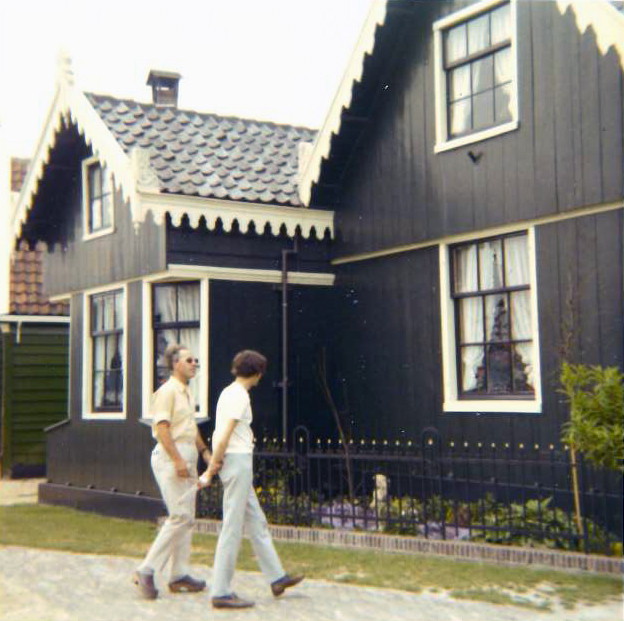
This 1970 photo shows Kees (left) when I visited him at Zaandam
I was privileged to work with Kees in 1967 when we filmed the birth process in the rabbit. He incorporated our work in a film (one of many) for Institut für den Wissenschaftligen Film in Göttingen.
Title page of Kees' most important publication
The Biology of Birth ISBN 3 490 04518 1
Most of Kees' publications were in German and his important book, co-authored with E. J. Slijper, is relatively unknown to anglophones. In addition to summarizing his own work it is an exceedingly valuable source for the older literature.

Kees was born 7 November 1934 and died 25 February 2020.

Monday, 26 March 2018

Parturition and placentophagy in baboons


Yellow Baboon (Papio cynocephalus) female with young
Wikimedia Commons
Two important papers just appeared on reproduction in baboons (Papio spp.). Natalia Schlabritz-Loutsevitch and co-authors (OA here) describe normal birth and pregnancy complications as observed in the laboratory. Their study was based on imaging (MRI, X-ray, ultrasound) and video recording of deliveries. 

I found it particularly fascinating to see the delivery process. When the baby's head emerges it is face upwards so looking directly at the mother (unlike in humans and chimpanzees where the head emerges face down). After cleaning the baby, the mother ignores it for several minutes and devotes all her attention to eating the placenta. Some of this can be seen in the delivery video (supplementary material here). 

Gesquiere and co-authors (here) summarize no less than 36 years of observations in free-ranging baboons, mainly yellow baboons (P. cynocephalus) from Amboseli in southern Kenya. Their focus is on what determines the interval between births. The main determinant was lactational amenorrhoea due to suppression of the ovarian cycle while the infant was breastfeeding. Once the baby was weaned, most females became pregnant again within 6-8 cycles.

There is an interesting parallel with human hunter-gatherers (previous post). Based on data from the !Kung people of South Africa, Roger Short (here) calculated that a woman in a hunter-gatherer society was pregnant for nearly four years of her life and spent 15 years in lactational amenorrhoea. As a consequence she endured menstrual cycles for rather less than four years. Short contrasted this with present day society where a woman might expect to have menstrual cycles for 35 years of her reproductive life.